
Are Sexual Health Supplements for Men Safe or Effective?
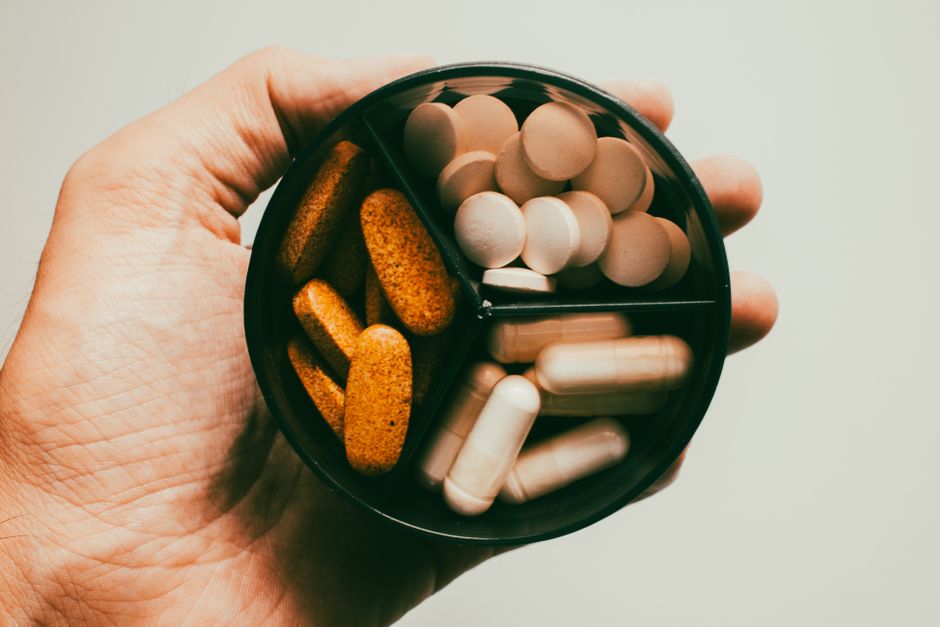
Most sexual-health supplements marketed to men do not have solid evidence for improving erections, libido, or testosterone, and some carry serious safety risks from hidden drug ingredients or medicine interactions. Ginseng has shown small, low-certainty effects in studies; zinc corrects a nutrient need but is not an erectile-dysfunction treatment. Persistent erectile dysfunction or low libido calls for medical assessment, not a stronger bottle.
What are the best sexual health supplements for men?
There is no best over-the-counter sexual-health supplement for men because no complementary approach has been shown safe and effective for sexual enhancement or erectile dysfunction, according to the National Center for Complementary and Integrative Health.
That answer separates four claims that ads often tie together: erection quality, libido, testosterone deficiency, and fertility. They are not the same problem. A product marketed with one broad promise does not establish benefit for any of them.
Ginseng has the clearest research record among common herbal names, though the record remains thin. A Cochrane review published in 2021 found that ginseng’s average improvement on validated erectile-function scores fell below the review’s threshold for clinical importance, with much of the evidence rated low certainty. The review found no trial comparison between ginseng and prescription PDE5 inhibitors.
L-citrulline and maca are often sold beside ginseng. The supplied research does not establish that either treats erectile dysfunction, raises testosterone, or improves fertility. L-arginine has more direct study than L-citrulline, yet a 2024 systematic review in The Journal of Sexual Medicine found that most nutraceutical approaches were generally ineffective; stronger rankings involved combinations with prescription PDE5 inhibitors, not proof that an over-the-counter product works alone.
A nutrient is not a sexual-performance drug. The NIH Office of Dietary Supplements states that adult men need 11 mg of zinc daily and that adults should not exceed 40 mg daily from food and supplements unless a health care provider recommends it. Its fact sheet does not identify zinc as an erectile-dysfunction treatment or a general testosterone booster.
| Ingredient or claim | What the supplied evidence supports | Key limit or safety issue |
|---|---|---|
| Asian ginseng | Small effects in low-certainty erectile-dysfunction research | Possible medicine interactions; long-term safety remains uncertain |
| L-arginine | Limited usefulness in a 2024 review, especially with prescription PDE5 inhibitors | Does not establish that over-the-counter products work independently |
| L-citrulline or maca | No established benefit in the supplied sources for erectile dysfunction, testosterone, or fertility | Marketing claim exceeds the supplied evidence |
| Zinc | Essential nutrient | Excess intake and drug interactions; not an established sexual-health treatment |
| Ashwagandha | No established benefit in the supplied sources for erectile dysfunction, testosterone, or fertility | Public data in this dossier does not establish its safety or efficacy for these claims |
Do testosterone boosters improve libido or erections?
“Testosterone booster” is a marketing label, not a diagnosis or a treatment standard. The supplied evidence does not show that zinc, ginseng, maca, L-citrulline, or ashwagandha reliably improves libido or erections by raising testosterone.
Low libido and erection problems can overlap. They can also diverge. The American Urological Association guideline says men with erectile dysfunction should have morning total testosterone measured as part of evaluation, which puts testing before a supplement claim.
The useful distinction is plain. A laboratory finding of low testosterone needs clinical interpretation; a label saying “boost” supplies neither the finding nor the interpretation. Evidence is a record. Marketing is a promise.
Claims deserve the same scrutiny used for other persuasive technologies and bold inference: a polished result is not proof of what caused it. That question also sits at the center of Can AI Really Read Your Emotions and Behavior?.
Which supplements help erectile dysfunction?
No supplement is established as a safe and effective treatment for erectile dysfunction. The NCCIH states that there is no definite evidence that herbal products are effective or safe for ED.
Ginseng does not overturn that conclusion. In the Cochrane review published in 2021, its results were below the review’s clinical-importance thresholds on two erectile-function measures. Some participants reported greater ability to have intercourse, yet that finding also came from low-certainty evidence. A small signal is not a dependable treatment.
The 2024 Journal of Sexual Medicine review points in the same direction. L-arginine alone ranked behind sildenafil and tadalafil, while no other nutraceutical regimen showed statistically significant efficacy against placebo. The combinations that ranked highly included prescription PDE5 inhibitors. That is evidence about combinations, not a license to treat a supplement as a substitute.
The American Urological Association says erectile dysfunction is a risk marker for cardiovascular disease and other health conditions that can need evaluation and treatment. Its guideline supports a thorough medical, sexual, and psychosocial history, physical examination, selective laboratory testing, and discussion of FDA-approved oral PDE5 inhibitors for men without contraindications.
Are male enhancement pills safe?
Male enhancement pills are not reliably safe, especially when they promise fast sexual effects or a cure-like result. The U.S. Food and Drug Administration says many products claiming sexual enhancement or treatment of sexual dysfunction are likely contaminated with dangerous hidden ingredients.
“Natural” is not a safety test. The FDA says such products can be presented as dietary supplements, foods, or all-natural treatments and sold online or in stores. It also says absence from its notification list does not establish safety because the list covers only a small fraction of contaminated products.
The chief danger is not only a disappointing result. Undeclared drug ingredients can interact with nitrates and cause a dangerous drop in blood pressure, according to NCCIH. This matters with diabetes, hypertension, high cholesterol, or heart disease, all conditions NCCIH names in its warning.
Ginseng has its own cautions even when the product contains what its label says. NCCIH reports uncertainty around interactions with calcium-channel blockers, other blood-pressure medicines, statins, and some antidepressants. Studies of its interaction with the anticoagulant warfarin have produced mixed results; NCCIH also says Asian ginseng can interfere with blood clotting and lower blood glucose.
Zinc also interacts with antibiotics, penicillamine, and thiazide diuretics used for high blood pressure, according to the NIH Office of Dietary Supplements. A supplement can be ordinary and still be the wrong fit beside a medicine.
Frequently Asked Questions
Can sexual supplements interact with blood pressure or heart medicines?
Yes. The NCCIH warns that undeclared drug ingredients in sexual-enhancement products can interact with nitrates and cause a dangerous fall in blood pressure. It also reports uncertainty about Asian ginseng interactions with calcium-channel blockers and other blood-pressure medicines, statins, and some antidepressants.
How can I tell whether a sexual-health supplement is adulterated?
A label cannot prove a product is free of undeclared drug ingredients. The FDA says many products sold as supplements, foods, or all-natural treatments are likely contaminated, and its public notification list covers only a small fraction of contaminated products.
When should I see a doctor instead of trying a supplement?
Persistent erectile dysfunction, low libido, or a sudden change in sexual function merits medical assessment. The AUA describes erectile dysfunction as a risk marker for cardiovascular disease and recommends medical, sexual, and psychosocial history, examination, selective laboratory testing, and morning total testosterone measurement.
Sources
- U.S. Food and Drug Administration: Sexual Enhancement and Energy Product Notifications
- National Center for Complementary and Integrative Health: Erectile Dysfunction and Sexual Enhancement
- American Urological Association: Erectile Dysfunction Guideline
- Cochrane Database of Systematic Reviews: Ginseng for Erectile Dysfunction
- The Journal of Sexual Medicine: Nutraceuticals for Erectile Dysfunction
- National Center for Complementary and Integrative Health: Herb-Drug Interactions
- NIH Office of Dietary Supplements: Zinc Fact Sheet for Consumers
Disclaimer: This article is for general information only and is not medical advice. It is not a substitute for diagnosis or treatment by a qualified healthcare professional. Always speak to your doctor before acting on anything you read here.