
How Should Blood Pressure for Over 70 Be Monitored?
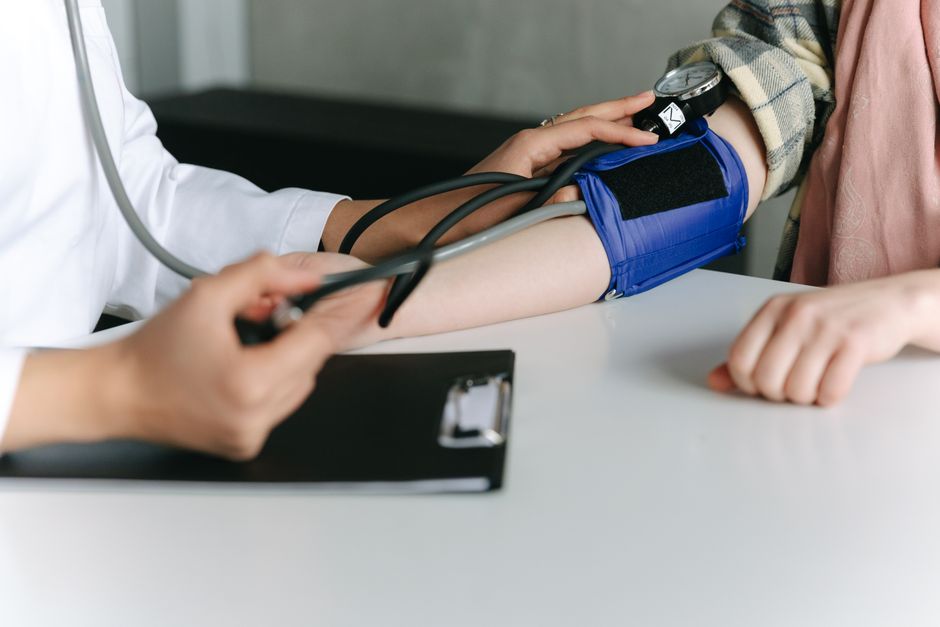
For reliable blood pressure for over 70, use a validated automatic upper-arm monitor, rest quietly for at least 5 minutes, and take two seated readings 1 minute apart twice daily for 7 days. Discard day one, average the remaining readings, and record symptoms, posture, meals, activity, illness, and medication timing. Add standing checks when dizziness or falls are concerns.
How should someone over 70 check their blood pressure at home?
Someone over 70 should check blood pressure with a validated automatic upper-arm cuff and a repeatable seated routine. The American Heart Association home-monitoring guidance identifies upper-arm monitors as the preferred option; wrist and finger devices are less reliable.
Set up the measurement before pressing start. For the AHA preparation window, avoid smoking, caffeine, and exercise for 30 minutes, empty the bladder, and rest quietly for at least 5 minutes. Sit with the back supported and feet flat, then support the arm at heart level. Keep the conditions as similar as practical from one session to the next.
Take two readings 1 minute apart and record both rather than choosing the lower or higher number. The AHA describes one measurement as a snapshot; the useful signal comes from the record over time. That distinction prevents a single stressful morning, poor night's sleep, or unusual meal from becoming the entire story.
Use a simple log that a caregiver can read without interpretation. Record the date, time, posture, systolic and diastolic results, pulse if available, symptoms, and relevant context. Add short notes such as “before breakfast,” “caffeine,” “poor sleep,” “ill,” or “medication taken.” If a caregiver manages several appointments or medications, a consistent log can reduce the cognitive load during a visit; it can sit alongside the broader questions discussed in What Questions Should I Ask When Choosing Assisted Living?
| Log field | What to record | Why it helps |
|---|---|---|
| Reading | Both results, 1 minute apart | Shows repeatability instead of one snapshot |
| Posture | Seated or standing, plus timing | Shows whether position changes the result |
| Context | Meals, caffeine, exercise, stress, illness | Identifies possible triggers |
| Symptoms | Dizziness, lightheadedness, weakness, or none | Connects numbers with safety concerns |
How many blood-pressure readings should an older adult take before finding their average?
An older adult should take two readings 1 minute apart, twice daily, for 7 days when possible, then discard the first day's readings and average the rest. This is the home-monitoring protocol reviewed in the National Institute for Health and Care Excellence guideline review, which specifies 4 to 7 days as the monitoring range. The AHA printable log recommends 3 days at minimum and 7 days preferably before an appointment.
The daily pattern is straightforward:
- Take two seated readings in the morning before medication and eating.
- Wait 1 minute between the two readings and record both.
- Take two more readings at bedtime before sleep.
- Repeat for 7 days when possible.
- Discard day one, then calculate the average of the remaining readings.
Discarding the first day is a useful correction, not wasted effort. It separates the setup period from the steadier record used for discussion. A caregiver can calculate separate averages for systolic and diastolic pressure and bring the raw readings as well; an average without the underlying results can hide wide swings.
For context, the NICE review cites 135/85 mm Hg as a home or ambulatory diagnostic threshold compared with 140/90 mm Hg in a clinic setting. These are comparison points, not a personal treatment target. Treatment decisions depend on the whole pattern, symptoms, other health factors, and the clinician's assessment.
Should blood pressure be checked sitting and standing after age 70?
Blood pressure should be checked sitting and standing when an older adult has dizziness, lightheadedness, falls, suspected postural hypotension, or a medication change that needs review. The CDC STEADI measurement tool uses a timed lying-to-standing check: lie down for 5 minutes, measure blood pressure and pulse, stand, then repeat after 1 minute and 3 minutes.
The purpose is timing. A reading immediately after standing may miss a change that appears after the person has been upright, while a late reading may miss the initial response. Use a safe setup, with a caregiver nearby if standing could cause dizziness or loss of balance, and stop the check if the person becomes unwell.
The CDC tool considers a drop of at least 20 mm Hg systolic or at least 10 mm Hg diastolic, or the presence of lightheadedness or dizziness, abnormal. The AHA scientific statement defines orthostatic hypotension as a sustained systolic decrease of at least 20 mm Hg or diastolic decrease of at least 10 mm Hg within 3 minutes of standing. Its 2024 statement reports that orthostatic hypotension affects an estimated 10% of adults age 60 or older and 16% to 30% of adults older than 65; among institutionalized older adults, reported prevalence is 50% to 65%.
Those figures describe populations, not an individual's diagnosis. The same AHA statement explains that detection can be influenced by time of day, meals, alcohol, vigorous exercise, medication timing, and the length of rest. Early-morning checks can be particularly informative when symptoms are worse then, but a clinician may also want the log to identify a meal-related or medication-related pattern.
Why is my blood pressure higher at the doctor's office than at home?
Blood pressure can be higher at the doctor's office because of a white-coat effect: elevated clinic readings with lower readings outside the clinic. The AHA measurement statement describes white-coat hypertension this way and reports that it occurs in about 15% to 20% of people with stage 1 hypertension; the statement was published in 2021. Older adults are more likely to have this pattern, which is why an averaged home record can add useful context.
The reverse pattern is called masked hypertension: a normal office reading with elevated readings at home or elsewhere. The same AHA statement notes that masked hypertension may carry more target-organ damage and cardiovascular risk than consistently normal blood pressure. A calm clinic result therefore does not automatically settle what happens during ordinary mornings, evenings, activity, or stress.
Home readings are generally lower than clinic readings. The AHA statement gives an approximate comparison of 135/85 mm Hg at home or with ambulatory monitoring to 140/90 mm Hg in a clinic. The numbers should be compared using the same measurement conditions and discussed with a clinician, rather than converted into a self-directed medication decision.
Flag patterns, not isolated surprises. Bring the seven-day record if home averages remain repeatedly high, if clinic readings are much higher, if home readings are high despite a reassuring appointment, or if standing readings repeatedly fall with symptoms. The AHA advises that people should not stop medication based on home readings without consulting a clinician.
A reading above 180/120 mm Hg is classified as severe hypertension in the AHA guidance, whose source year is not stated on the supplied page. If that level occurs with symptoms such as chest pain or shortness of breath, the AHA says emergency attention is required. Record the result and symptoms and follow the appropriate urgent-care instructions rather than waiting for the next routine appointment.
Frequently Asked Questions
When should an older adult measure blood pressure relative to medication?
The AHA printable log recommends taking the morning readings before medication and eating, then taking the evening readings at bedtime before sleep. The exact timing can depend on the treatment plan, so the log should state when medication was taken and be reviewed with a clinician rather than used to change treatment independently.
What does it mean if blood pressure drops after standing?
A sustained drop of at least 20 mm Hg in systolic pressure or at least 10 mm Hg in diastolic pressure within 3 minutes of standing meets the definition of orthostatic hypotension used by the AHA scientific statement, published in 2024. Lightheadedness or dizziness matters even when the numerical drop is smaller, and recurring results merit clinical review because timing, meals, exercise, rest, and medication can affect the finding.
Should I average several blood-pressure readings instead of relying on one result?
Yes. A single reading is a snapshot, while repeated readings reveal a more useful pattern. The NICE guideline review published in 2020 describes a home-monitoring protocol using two readings 1 minute apart twice daily for 4 to 7 days, with the first day's readings discarded and the remaining results averaged.
What home-blood-pressure pattern should I show a doctor?
Bring the complete log, including both readings from each session, the calculated average, posture, pulse when available, symptoms, and notes about meals, caffeine, exercise, illness, stress, and medication timing. Highlight repeated high readings, repeated low readings, dizziness after standing, large differences between clinic and home results, and any reading above 180/120 mm Hg with symptoms, as described in the AHA guidance whose source year is not stated on the supplied page.
Sources
- American Heart Association: Monitoring Your Blood Pressure at Home
- American Heart Association: My Blood Pressure Log
- CDC STEADI: Measuring Orthostatic Blood Pressure
- American Heart Association Scientific Statement on Orthostatic Hypotension
- NICE Guideline Review: Home Blood-Pressure Monitoring
- American Heart Association Scientific Statement on Blood Pressure Measurement
Disclaimer: This article is for general information only and is not medical advice. It is not a substitute for diagnosis or treatment by a qualified healthcare professional. Always speak to your doctor before acting on anything you read here.
You may also like
What Triggers AFib Episodes, and Do I Need to Avoid Coffee, Exercise, or Food?
An evidence-aware guide to finding personal AFib triggers without reflexively avoiding coffee, exercise, or everyday foods.

What Can I Try for Erectile Dysfunction Beyond Pills?
Compare vacuum devices, injections, urethral medicine, and implants—and learn what a clinician may review before changing ED treatment.

What Is Juvenile Osteoporosis Life Expectancy?
Juvenile osteoporosis usually does not shorten life expectancy, but prognosis depends on its cause, fractures, growth, and treatment response.

What Does Severe Osteoporosis Life Expectancy Mean?
Severe osteoporosis is not usually terminal, but fractures, frailty, age and other illnesses can affect survival and independence.