
Can a Police Chaplain Badge Give You Access or Authority?
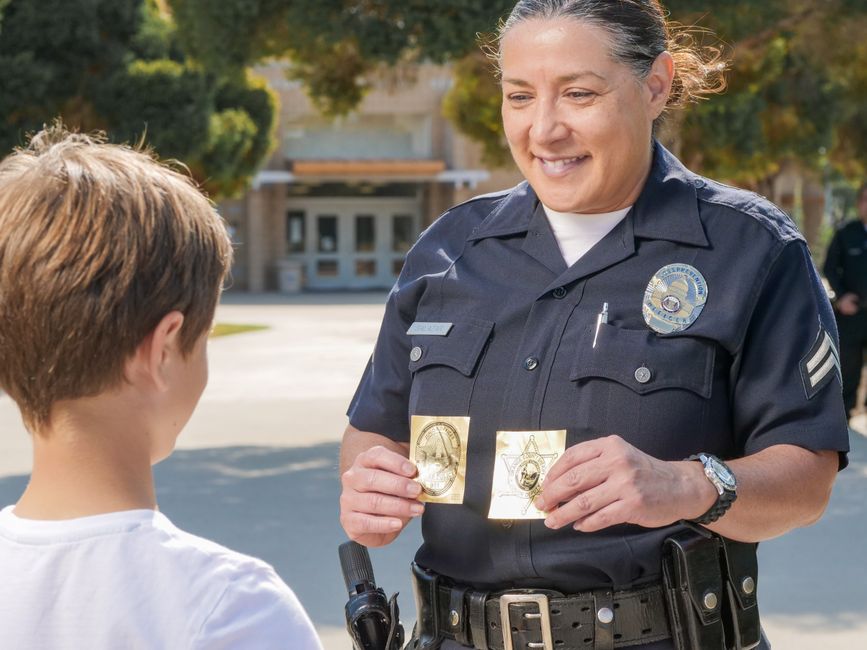
A law-enforcement chaplain badge identifies its wearer as a department chaplain; it does not make the wearer a police officer or grant law-enforcement powers. A department may allow a chaplain into a scene or other restricted setting when its policy and the supervisor in charge permit it. The badge is identification, while access is conditional and authority remains with sworn personnel.
Can a chaplain badge let you enter a police scene?
A chaplain badge alone does not grant entry to a police scene. Access depends on the department’s policy and the approval or direction of personnel in charge.
According to the Asheville Police Department’s chaplain policy, chaplains may enter crime and accident scenes when their services are needed and the supervisor in charge approves. The same policy says a chaplain responding to an in-progress call may have to wait in a secure area until the situation is deemed safe. The identification card establishes who the chaplain represents; it does not open every boundary.
Other departments define the limits in their own way. The St. Joseph Police Department policy bars chaplains from entering a crime scene or intervening in an investigation without a supervisor’s permission. Kansas City, Kansas, says chaplains respond to calls only when requested by specified department personnel or the public information officer, and remain under direct department supervision at crime scenes.
These rules distinguish a chaplain’s presence from independent access. A chaplain can provide support when invited or approved; the department controls whether, when, and where that happens. Before accepting a role, ask who can request a response, who approves entry, where you wait if a scene is unsafe, and who supervises you once you arrive.
Does a police chaplain badge give you law enforcement authority?
No. A police chaplain badge identifies a support role and does not confer law-enforcement authority.
St. Joseph’s policy states that chaplains are not commissioned sworn officers and have no law-enforcement authority. Hawai‘i Police Department policy makes the same distinction: chaplains are not law-enforcement officers, and the Police Chief appoints them to serve solely as chaplains. Asheville likewise describes chaplains as non-sworn volunteers who must never function as officers.
The distinction matters most when a chaplain is near an investigation or an officer’s work. St. Joseph bars interference in an investigation without supervisor permission. Hawai‘i directs chaplains not to interfere with officers’ lawful duties except when asked or when involvement is necessary to preserve life and protect an officer. That narrow policy exception does not turn the chaplain into an officer or grant general powers.
Clothing and insignia reinforce the boundary. Asheville requires uniforms to be distinguishable from sworn officers and requires a prominent chaplain identifier on clothing marked “POLICE.” St. Joseph requires department-issued identification that clearly distinguishes chaplains from commissioned members. Hawai‘i’s formal badge uses “Chaplain” in place of an officer’s rank, and its formal uniform is reserved for ceremonial events.
Designs differ. The consistent point is that a chaplain’s identification should mark the role clearly, not suggest sworn status. Ask what badge or identification is issued, what clothing is allowed during ordinary duties, how you must identify yourself, and when a formal uniform may be worn.
Who issues badges to law enforcement chaplains?
The department running the chaplain program sets the identification rules and issues or authorizes the chaplain’s identification.
In Asheville, chaplains receive department volunteer identification cards and must carry them while representing the department. St. Joseph requires chaplains to wear department-issued identification cards that distinguish them from commissioned personnel. Hawai‘i describes a formal chaplain badge as part of its department uniform policy, with the identifying word “Chaplain” instead of an officer’s rank.
Those examples show why there is no single nationwide badge design or universal credentialing process in the supplied policies. The issuing agency defines the badge, uniform, and boundaries of the role. A badge from one department does not establish access or authority at another agency’s scene.
Vetting also varies. Asheville’s requirements include a background investigation, good standing in a religious faith, ministry and pastoral-counseling experience, and a valid driver’s license. St. Joseph lists ordination or licensure, good standing in a recognized local church, theological training or appropriate experience, an application and church-support letter, background and reference checks, credential verification, and Advisory Committee review; the Police Chief has final selection authority.
Hawai‘i requires ordination or licensure by a recognized religious body, pastoral experience, willingness to follow department policy, and a valid state driver’s license. Its department-specific training covers radio procedures, district boundaries, organizational structure, and policies. Kansas City, Kansas, includes church recognition or ordination, ministry experience, screening committee review, and Police Chief approval. These are examples of local requirements, not a universal checklist.
Before accepting a chaplain role, ask the agency who appoints chaplains and issues identification; what background, faith, experience, and training requirements apply; what clothing is permitted; who can authorize scene access; and what supervision and identification procedures apply on a call. Clear answers define the role before a badge is worn.
Frequently Asked Questions
What credentials do I need before a department gives me a chaplain badge?
Requirements vary by department. The policies cited here call for some combination of ordination or licensure, standing in a recognized faith community, ministry or pastoral experience, an application, background or reference checks, training, and approval by department leaders. Ask the department for its current policy and selection process.
How is a chaplain badge different from a police officer badge?
A chaplain badge identifies a chaplain’s support role and is designed to distinguish the wearer from sworn personnel. Hawai‘i’s policy says its chaplain badge uses the word “Chaplain” in place of an officer’s rank. A chaplain badge does not confer police powers.
Sources
You may also like

How Do I Build Ministry Support Without Pressuring People?
Build lasting ministry support with clear invitations, useful updates, and respectful ways to give monthly, once, or through prayer.

How can a church create ethical business sponsorships for an outreach event?
A practical guide to church event sponsorships: find aligned partners, write a clear proposal, set recognition boundaries, and report outcomes.